Floyd Wells
In Cold BloodFloyd Wells is the former farmhand and imprisoned burglar whose recollection of Dick’s plans led investigators to the men responsible for the Clutter family murders. He had described Herbert William Clutter’s farm to Dick years after working there; when the murders unfolded as Dick had predicted, Wells’s knowledge became the crucial connection between an apparently motiveless crime and its perpetrators. His account also gives the investigation a human hinge: he had to decide whether to remain silent for his own safety or speak for a family he remembered with gratitude.
Identity and Background
Wells had drifted through several kinds of work, including military service, ranch work, and mechanics, before a burglary conviction sent him to the Kansas State Penitentiary for a sentence of three to five years. In 1948, when he was nineteen, he had found work at River Valley Farm near the Colorado border. He stayed for about a year, through the winter, and left because he wanted to move on, not because of a quarrel with his employer.
Wells remembered Herbert William Clutter as generous and fair to the people who worked for him. If a worker was short before payday, Clutter might lend him five or ten dollars; he paid good wages and gave bonuses for good work. Wells remembered the whole family warmly. The younger children, Nancy and Kenyon, had been about five or six when he knew them, while the older daughters were already in high school. That familiarity mattered later: Wells was not merely repeating a name he had heard in prison but describing a household whose members he had known and whose kindness he had not forgotten.
After leaving the farm, Wells married and divorced, served in the Army, and continued moving through different circumstances. In June 1959, ten years after he had last seen Clutter, he was sent to prison for breaking into an appliance store. He had intended to obtain electric lawn mowers for a rental business, not to sell them. The scheme failed and brought him another prison sentence; it also placed him in a cell with Dick, creating the connection that would eventually expose the murder plan.
The Farm Description and Dick’s Plan
Wells shared a cell with Dick for about a month in June and July 1959, while Dick was finishing his own sentence and expected parole in August. Dick talked about possible schemes after release, including impersonating an Air Force officer in a town near a missile base to pass fraudulent checks. He also spoke of rejoining Perry Smith, a former cellmate already out on parole, for a major robbery. Wells had never met Perry, but he learned that Dick considered him a partner for a sufficiently profitable crime.
The Clutter farm entered their prison conversations when Wells described his former work. Dick asked whether Clutter was wealthy, and Wells said that he was; he recalled telling Dick that running the operation could cost Clutter ten thousand dollars in a week. Dick then pressed him about the family, the children’s ages, the route to the house, its layout, and whether Clutter kept a safe. Wells said he thought there was a cabinet or safe behind the desk in Clutter’s office. His recollection was uncertain about the object itself, but the information gave Dick a picture of the household and a possible source of money.
Dick repeatedly described a plan to rob the farm and kill everyone who might witness the crime. Wells remembered hearing how the family would be tied up and killed, and said that he had warned Dick that he would not get away with it. But Wells did not try to persuade him at length: he thought the plan was prison bravado, the kind of talk he heard often from men imagining what they would do after release. His disbelief left the warning unanswered. When the crime later matched the plan he had heard, the details that once seemed boastful became evidence.
Recognition and Decision to Inform
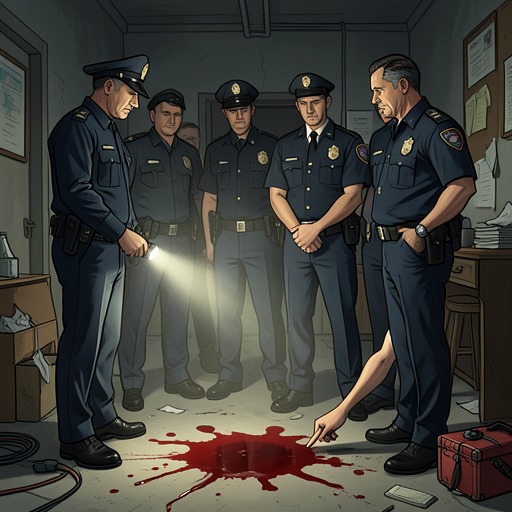
On November 17, 1959, Wells was listening to a radio broadcast in his cell when a report described the murder of four members of the Clutter family at their farm near Garden City. The victims had been bound, gagged, and shot; investigators said they could find no motive. Wells was stunned. He had known the family, and he knew who had spoken of killing them. Yet recognition did not immediately become disclosure.
He monitored radio and newspaper reports during the following weeks. A Kansas newspaper’s offer of a one-thousand-dollar reward for information nearly moved him to speak, but fear held him back. Other prisoners might retaliate if they learned he had informed on a fellow inmate. He also feared that authorities could charge him as an accessory: he had supplied Dick with information about the farm and could be portrayed as having understood what Dick intended. With the investigation stalled and the news coverage diminishing, Wells remained silent despite knowing the connection investigators needed.
Eventually, the need to tell someone outweighed his hesitation. He confided in a religious Catholic prisoner, who urged him to approach the proper authorities and arranged a way for him to be called to the deputy warden without making the purpose obvious to other inmates. Wells was frightened, but he remembered Clutter’s generosity, including a fifty-dollar Christmas gift. He spoke first with the deputy warden and then with Warden Hand. While Wells was still in the warden’s office, Hand telephoned Logan Sanford, who contacted Alvin Dewey. That chain of calls carried Wells’s prison knowledge into the investigation.
Investigation, Trial, and Narrative Role
The lead arrived after Dewey and the eighteen men assisting him had pursued hundreds of unsuccessful possibilities. For three weeks, the investigators had concentrated on tracing everyone who had worked at the Clutter farm; Dewey later observed that they might have found Wells themselves within days. To him, the tip seemed like a piece of luck, though he acknowledged to Marie Dewey that it might not be true and said he had a hunch. Wells’s account therefore did not instantly settle the case: it redirected an exhausted investigation toward Dick and Perry and gave the detectives a specific story to test.
Dick understood the danger Wells posed. While awaiting questioning, he recognized that the supposed witness was likely his former cellmate, the person other than Perry who could connect him to the Clutters. Dick had even contemplated attacking Wells in prison with a homemade weapon, but had not done so. He believed that Wells’s word alone might not count as proof and suspected that a reward or other inducement had prompted him to speak. Those calculations show the asymmetry of their positions: Wells had feared Dick’s possible retaliation, while Dick now feared that Wells’s recollection would make the concealed connection visible.
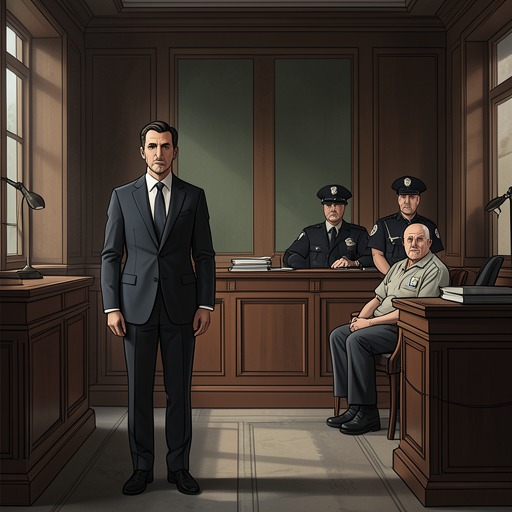
At trial, Wells was presented as the prosecution’s mystery informant. Because he remained vulnerable to retaliation at the Kansas State Penitentiary, he was moved to a jail in an adjacent county before testifying. His walk across the courtroom was described as wary; as he passed Dick, Dick whispered at him, and Wells moved away without responding. The state supplied him with a dark-blue suit, seeking to make its central witness appear respectable and trustworthy. His testimony itself was described as orderly and prepared in advance: he confirmed that he had worked at River Valley Farm, later shared a prison cell with Dick, and told him about the farm and family.
The courtroom account made the earlier connection more restrained than Wells’s fuller recollection of Dick’s repeated plans. He testified that Dick had spoken of going west after parole and perhaps stopping to seek work from Clutter, while Wells had told him Clutter was wealthy. When asked why he had identified Dick after hearing about the murders, Wells answered that the crime had been carried out just as Dick had said it would be. In the narrative, that observation closes the distance between prison talk and the actual crime: the remembered plan, once dismissed as boast, becomes the test by which Wells recognizes what has happened. His role is consequently more than that of a source of information. He is the witness whose personal memory, delayed by fear and doubt, makes the investigation’s central causal link legible.